
Produce Temperature Requirements: Questions to Ask Before You Ship
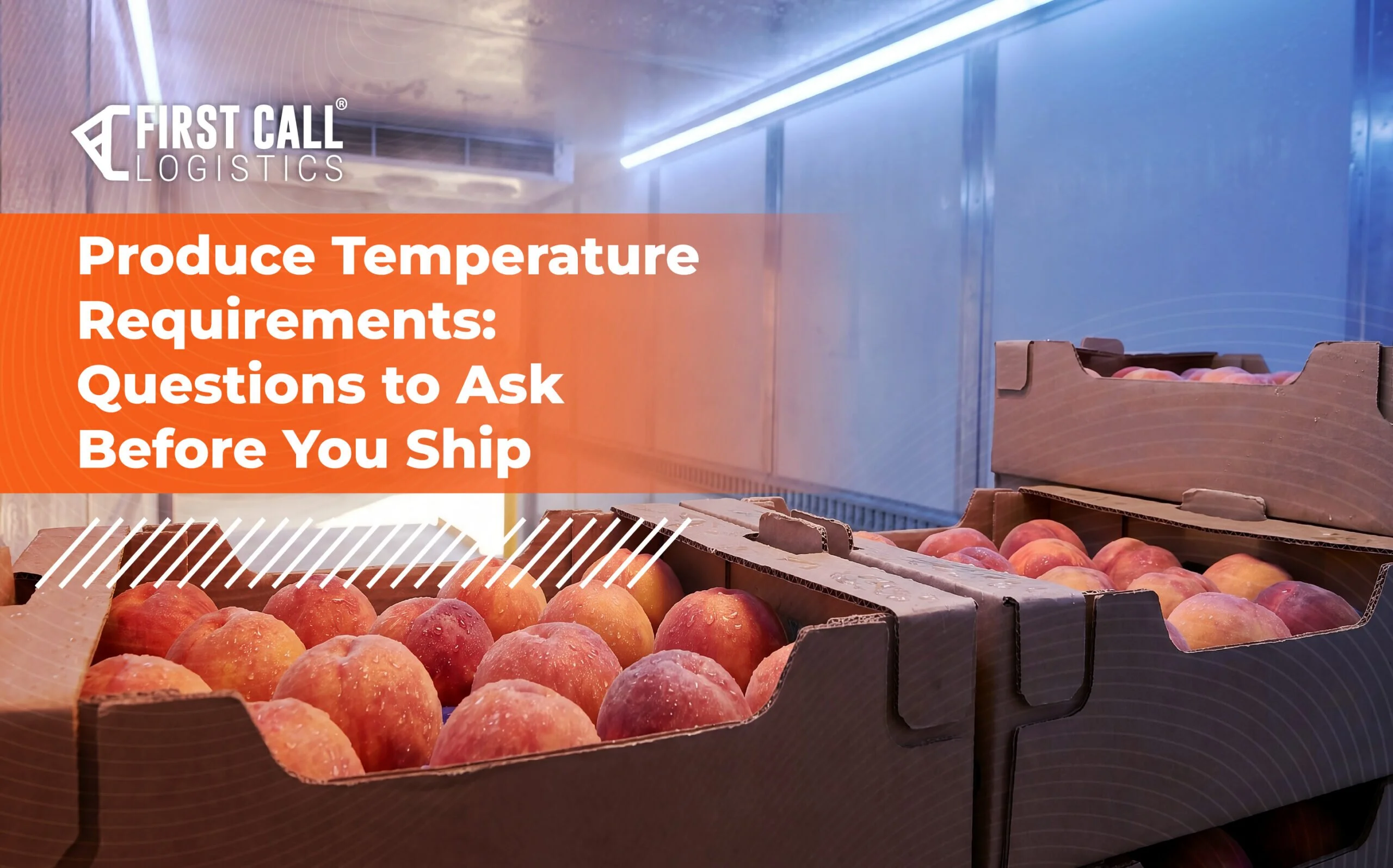
A load of romaine lettuce ships out of Salinas on a Tuesday. The carrier sets the reefer to 40°F, a reasonable temperature for general refrigerated freight. The load arrives in Indianapolis four days later. The lettuce is wilted, discolored, and rejected at the DC.
The 3PL calls it a carrier issue. The claim gets filed. The produce is already in a dumpster.
The actual problem started before the truck left the dock. Romaine is commonly transported near 32–34°F to help maintain quality and shelf life during transit. At 40°F, quality deteriorates quickly, especially over longer hauls. The carrier wasn’t running a bad trailer. The 3PL simply didn’t communicate the right temperature requirement, and nobody caught it before the load departed.
Failures like this are often traced back to planning and communication issues that occur before the truck leaves the dock. And they frequently share the same root cause: a logistics provider that treats perishable freight like dry freight with the thermostat turned down.
Why Temperature Requirements Are More Specific Than Most 3PLs Account For
Every produce commodity has its own optimal transit temperature range. These ranges aren’t interchangeable, and they’re not always intuitive.
Temperature requirements can vary not only by commodity, but also by maturity, ripeness, intended use, and customer specifications.
A few examples:
Temperature requirements for some commodities, including citrus, vary significantly by variety, maturity, and storage duration. Always confirm with your supplier before dispatch.
| Commodity | Optimal Transit Temp | Why It Matters |
|---|---|---|
| Romaine lettuce | 32–34°F | Highly sensitive; brief exposure to 40°F+ accelerates decay |
| Avocados (ripe) | 36–40°F | Sensitive to ethylene; store away from high-ethylene commodities |
| Avocados (unripe) | 41–55°F | Range varies by cultivar and storage duration |
| Tomatoes (mature green) | 55–60°F | Below 50°F causes chilling injury and flavor loss |
| Bananas | 56–58°F | Among the most temperature-sensitive; highly reactive to ethylene |
| Strawberries | 32–34°F | Extremely short shelf life at higher temps |
Temperature ranges are general guidelines based on USDA and UC Davis Postharvest Technology Center recommendations. Confirm commodity-specific requirements with your supplier and logistics provider before each shipment.
A general 3PL booking reefer freight might default to 34–38°F as a “safe” range. For romaine, that works. For tomatoes or ripe avocados, it causes chilling injury (cellular damage that shows up as pitting, discoloration, or mushy texture at delivery). The load looks fine when it departs. It fails inspection when it arrives.
The produce operation absorbs the rejection. The freight claim process begins. And the relationship with that retail or foodservice customer takes a hit.
Common Produce Temperature Failure Points
Temperature management for produce isn’t just about setting the reefer dial correctly. It involves several checkpoints where things can go wrong:
Pre-cooling. Produce that hasn’t been properly pre-cooled before loading will warm the trailer interior and require the reefer to work harder to pull it down. If a load isn’t at or near its target pulp temperature before it goes on the truck, it may never reach the right temperature during transit, especially on shorter hauls. This risk multiplies on expedited loads, where the pre-cooling window is often the first thing skipped under time pressure. Expedited perishables freight requires a different playbook than standard dry freight.
Pulp temperature vs. air temperature. Reefer units regulate air temperature inside the trailer. Pulp temperature (the actual internal temperature of the product) can lag behind by hours. A 3PL focused only on the reefer setpoint may not ask about pre-cooling protocols or request pulp temperature documentation at origin.
Mixed loads. When multiple commodities ship together, temperature conflicts can arise. Different produce commodities often have different temperature requirements, and mixed loads require careful planning before dispatch. A provider who doesn’t identify these conflicts before booking is increasing the risk of quality issues or rejection at delivery.
Reefer mode. Continuous vs. cycle-sentry operation affects how the trailer handles temperature-sensitive freight. Some commodities do better in continuous mode; others are more susceptible to air movement. Carrier operating practices vary, which is why commodity-specific instructions should be confirmed before departure.
Communication breakdowns. Temperature requirements need to travel from the produce operation to the 3PL to the carrier, clearly and in writing, before the truck is dispatched. A 3PL that passes generic load tenders without commodity-specific temperature instructions is creating risk at every handoff.
When these issues occur together, the likelihood of a quality problem or rejection increases significantly. Understanding managing product rejection before it happens starts with closing these gaps upstream.
What Good Temperature Management Actually Looks Like
A 3PL that understands produce doesn’t treat temperature as an afterthought. It’s part of the process from the beginning.
Before dispatch:
- Confirm commodity-specific temperature requirements with the produce operation
- Verify pre-cooling status and target pulp temperature at origin
- Check for mixed-commodity conflicts before booking
- Communicate requirements to the carrier in writing, not just verbally
During transit:
- Monitor trailer temperature data where available
- Establish notification procedures for temperature excursions so the appropriate parties are informed before the load arrives
At delivery:
- Document pulp temperatures at destination
- Flag discrepancies and preserve records for any claims process
None of this is complicated. But it requires a team that knows why it matters and has a process built around it.
None of this guarantees a perfect transit. But it significantly narrows the gap between what can go wrong and what actually does.
FCL’s dedicated cold chain logistics team, First Call FRESH, supports temperature-sensitive freight through transportation planning, shipment visibility, and distribution coordination aligned to product requirements and delivery timing.
The Question to Ask Your Logistics Provider
If you’re evaluating a logistics provider for produce freight, one question cuts through a lot of noise:
“What’s your process for communicating commodity-specific temperature requirements to the carrier, and how do you handle a temperature excursion during transit?”
A provider with produce and cold chain experience should be able to provide a direct, specific answer. They’ll talk about pre-cooling verification, written temperature instructions in the load tender, and who gets notified if the reefer alarm triggers.
A general 3PL will tell you they handle refrigerated freight all the time, which is true, but beside the point. Handling reefer freight and understanding produce are not the same thing.
Why Documentation Matters More Than Ever
Retail receiving requirements and documentation expectations have become more rigorous, increasing the importance of maintaining records throughout the cold chain. Under FSMA traceability requirements and growing retail documentation expectations, produce operations are increasingly expected to maintain records that support product movement, receiving requirements, and cold chain execution.
A temperature failure that might have been absorbed quietly in the past is more likely today to result in a rejected load, a chargeback, and a conversation with a retail buyer about supply chain reliability.
The logistics provider you use for produce is part of that supply chain. If they don’t understand your product’s requirements, you’re carrying that risk.
First Call Logistics operates a dedicated cold chain team, First Call FRESH, supporting temperature-sensitive freight across produce, food and beverage, and other supply chains with defined temperature requirements. If you’re moving perishable product and want to discuss your transportation and distribution needs, contact our team.
Moving Temperature-Sensitive Freight?
Cold chain isn’t just reefer equipment. It’s knowing your commodity, your temperatures, and what to do when something goes wrong. Real people. Direct access. A team that stays on top of your freight so you don’t have to.