
Where Manufacturing Inbound Freight Breaks Down
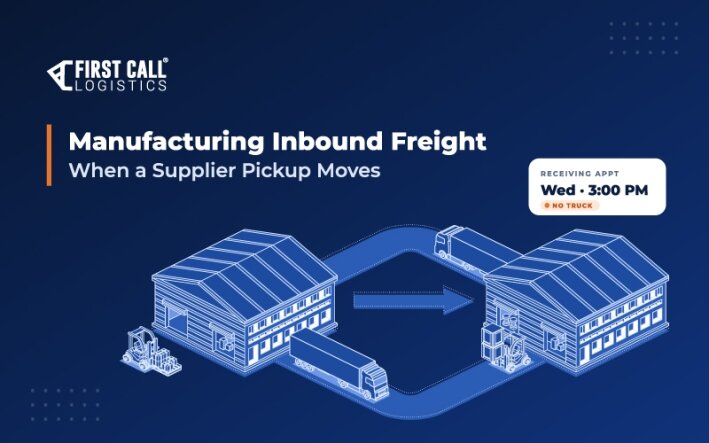
When a supplier rebooks a missed pickup on an inbound freight lane, the manufacturing plant needs to know whether the new delivery time still works for production. In one example, a component supplier moves a missed Tuesday pickup to Wednesday. With overnight transit on the lane, the parts will still miss their Wednesday receiving appointment. The supplier has a new pickup on the books. The plant still has a Thursday morning run on the schedule.
If the planner hears about the change on Tuesday, there is still time to check stock, move another run up, or see whether an expedite is practical. If the first call comes from receiving on Wednesday afternoon, those same decisions have to be made with less time.
Who Arranges the Freight, and Who Reports Exceptions?
Manufacturing inbound freight involves three responsibilities that are easy to treat as one: who books transportation, who reports shipment status, and who escalates when something changes. A supplier can book its own carrier and still be required to confirm pickups and report delays. Freight routed by the manufacturer can still have gaps if pickup confirmations go to a transportation desk and do not reach the production planner.
Freight billing is a separate issue. Terms such as prepaid or collect describe how the carrier bills for the shipment. The purchase agreement or supplier instructions should spell out who arranges transportation and who must notify the plant if a shipment does not move as planned. That holds whether the manufacturer runs inbound routing with its own team or through a managed transportation provider.
Three Decisions the Plant Has to Make
Can We Run With What the Supplier Is Sending?
A truck can arrive on time and still leave without the expected quantity. Material may not be staged, paperwork may be incomplete, or the supplier may be waiting on its own components and release only part of the order.
Before Thursday’s run, the materials planner needs the quantity that actually shipped, not the quantity on the purchase order. If the supplier will ship short, it should tell the plant before pickup, confirm the quantity being released, and share timing for the balance if known. Where the plant requires an advance ship notice (ASN), which can be sent as an EDI 856, the supplier can use it to report what shipped. If the ASN overstates the quantity, the shortage may not surface until receiving counts the freight, which may be after the run is already scheduled to start.
Does the New Pickup Still Work?
To know whether a rebooked pickup can protect the run, compare the new delivery estimate with when production needs the parts, not with the original pickup date.
If the new timing does not work, the plant has to choose among the options it still has: run from stock on hand, move another job ahead, or expedite the material. Even if the supplier covers the cost of an expedite, the plant still has to decide whether it can arrive in time.
Rebooking can also change who shows up. A new trailer, driver, or motor carrier may require approval before pickup, and the inbound program should say who can authorize the change and who verifies the details before the freight is released. An unannounced motor carrier change makes it harder to confirm which company is taking possession of the shipment, making it both a carrier vetting and scheduling concern.
The missed pickup started the problem. The missing notice made it worse.
What Does Receiving Need to Change?
A revised arrival can show up on a tracking link or visibility portal while the original receiving appointment is still on the books. If no one acts on it, the slot may go unused, and the load may arrive later with no appointment waiting.
Receiving needs the revised ETA to move the appointment and fit the load around the other scheduled deliveries. The planner needs to hear about it if the new time puts the run at risk.
What a Manufacturing Inbound Freight Program Should Define
Earlier notice does not prevent every disruption, but it preserves time to decide. Before freight moves, a controlled inbound program should define these responsibilities in writing:
- Readiness and quantity: who confirms that the material and the required quantity are ready before pickup.
- Booking and changes: who books transportation, which carrier, equipment, or pickup-time changes require approval, and who approves them.
- Pickup and delivery updates: how pickup confirmation and revised arrival estimates reach the plant, and who at the plant receives them.
- Exception notification: which events require notice, who sends it, who receives it, and how soon it must be sent after the issue is identified.
- Approvals: who approves a partial shipment, a revised receiving appointment, or a recovery move such as an expedite.
Manufacturers can document these rules in a supplier routing guide or logistics manual. IDEAL Automotive’s supplier guidelines, for example, require suppliers to immediately communicate any change to an order’s delivery date or quantity, along with any expected delivery bottleneck, to the responsible scheduler. Details will differ by company. What matters is that suppliers, carriers, and the plant work from the same rules.
The supplier pickup is one freight handoff among several in a manufacturing network. Like the others, it is easier to manage when problems are reported where they start.
First Call Logistics helps manufacturers coordinate inbound freight from suppliers to plants, with shipment visibility and updates when delivery expectations change. If you have a shipment to plan, talk with our team.
Inbound Loads Arriving Late or Short?
Missed pickups. Short shipments. No status updates.
Need to move components from a supplier to your plant?