
What You Need to Know About Drop Trailer Services
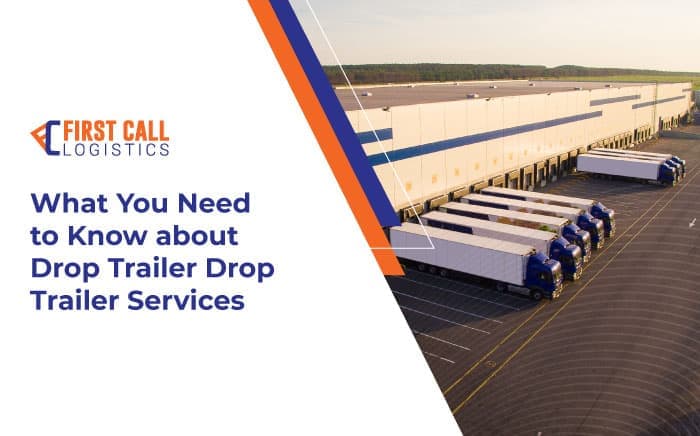
Supply chain efficiency depends on keeping freight moving and minimizing delays at shipping and receiving facilities. One strategy many shippers and carriers use to reduce driver wait times is a drop trailer program.
Drop trailer services allow drivers to leave trailers at a shipper’s facility for loading or unloading at the warehouse’s convenience. Instead of waiting at the dock, the driver drops the trailer and returns later to pick up another preloaded unit. This approach improves scheduling flexibility, reduces detention risk, and helps both carriers and warehouse teams operate more efficiently.
A drop trailer program is a shipping arrangement where a driver leaves a trailer at a facility for loading or unloading and later returns to pick up another trailer that is ready to move.
How Drop Trailer Programs Help Shippers, Carriers, and Customers
Drop trailer shipping can help reduce delays during loading and unloading while giving drivers more flexibility to manage their available driving hours. According to the FMCSA, property-carrying drivers are generally limited to 11 hours of driving within a 14-hour on-duty window. Allowing trailers to be dropped for later loading or unloading can reduce the amount of time drivers spend waiting at facilities and help them better align their schedules with Hours of Service requirements.
In operations where drop trailer programs are well coordinated, a trailer may be dropped by one driver and later picked up by another once it has been loaded or unloaded. In some transportation networks this model works alongside power only trucking, where carriers provide the tractor and driver to move preloaded trailers between facilities.
The flexibility provided by drop trailer programs can also benefit warehouse teams. Facilities involved in warehousing and distribution operations can load or unload trailers when staffing and dock availability allow, rather than working strictly around driver appointment windows. Reducing dwell time at the dock can improve overall facility efficiency and help maintain more consistent transportation schedules.
Drop trailer programs can also provide additional flexibility within a shipper’s supply chain. Trailer pools may function as temporary staging space when freight volumes fluctuate or when warehouse storage capacity is limited.
Is a Drop Trailer Program for You? Factors to Consider
Drop trailer services can offer operational advantages, but they are not the right fit for every shipping operation. Before implementing a drop trailer program, companies should evaluate factors such as freight type, facility capacity, delivery timelines, and how frequently trailers move through the network. These programs are often used as part of broader dedicated transportation strategies designed to support consistent freight movement between facilities.
In many cases, drop trailer programs help reduce driver dwell time and provide greater flexibility for warehouse scheduling. However, these programs may be less effective for shipments that require tightly controlled delivery windows or active monitoring during transit.
Certain freight types, such as fresh produce or other highly perishable goods, may require more structured transportation schedules. Products that depend on strict temperature control or rapid delivery may be better suited to live loading or other transportation arrangements where transit timelines are more predictable.
While trailers in a drop program are often loaded and unloaded quickly, the time freight spends staged at a facility can vary depending on warehouse operations and scheduling. Companies considering a drop trailer strategy should evaluate whether this flexibility aligns with their service requirements and inventory management practices.
Terms to Know When Exploring Drop Trailer Programs
- Drop Trailer
- A trailer left at a facility without a scheduled live loading or unloading appointment. The trailer can be loaded or unloaded when warehouse staff are available, rather than requiring a driver to remain on site.
- Trailer Pools (or Drop Pools)
- A group of trailers staged at a single facility for use in a drop trailer program. Trailer pools allow shippers and warehouses to load or unload equipment as capacity and scheduling allow.
- Drop-and-Hook
- A transportation practice where a driver drops off one trailer at a facility and connects to another trailer that has already been loaded or unloaded. This approach allows drivers to exchange equipment quickly and continue to the next destination without waiting for live loading.
- Trailer Leasing
- An arrangement in which a company leases trailers rather than purchasing them outright. Leasing may provide additional equipment capacity while reducing the upfront capital investment required to expand a trailer fleet.
Frequently Asked Questions About Drop Trailer Services
What Is a Drop Trailer Program?
A drop trailer program allows a driver to leave a trailer at a shipper’s or receiver’s facility to be loaded or unloaded later. Instead of waiting at the dock, the driver drops the trailer and picks up another one that is ready to move.
How Do Drop Trailer Programs Benefit Carriers?
Drop trailer programs reduce driver wait times at shipping and receiving facilities. This allows drivers to spend more time on the road moving freight rather than waiting for trailers to be loaded or unloaded.
When Should Shippers Use Drop Trailer Services?
Drop trailer programs work best when facilities have consistent freight volumes and adequate yard space to store trailers. They are commonly used in high-volume shipping networks where minimizing dwell time improves overall transportation efficiency.
Are Drop Trailer Programs Used with Power Only Trucking?
Yes. Some drop trailer programs use power only trucking, where a carrier provides the tractor and driver while the trailer is supplied by the shipper or a third-party logistics provider.
Drop trailer services are widely used in truckload transportation networks to help reduce delays at shipping facilities and provide greater flexibility for drivers and warehouse teams. By allowing trailers to be staged for loading or unloading, companies can better coordinate freight movement and reduce dwell time across their transportation operations. In many networks, drop trailer programs are used alongside power only trucking, where carriers provide the tractor and driver to move preloaded trailers between facilities. Understanding how drop trailer programs function can help shippers evaluate whether this model fits within their broader supply chain strategy.
Freight and Logistics Support from First Call Logistics
Managing transportation and supply chain operations requires careful planning and coordination. First Call Logistics supports shippers with structured freight solutions, experienced logistics professionals, and a nationwide carrier network.